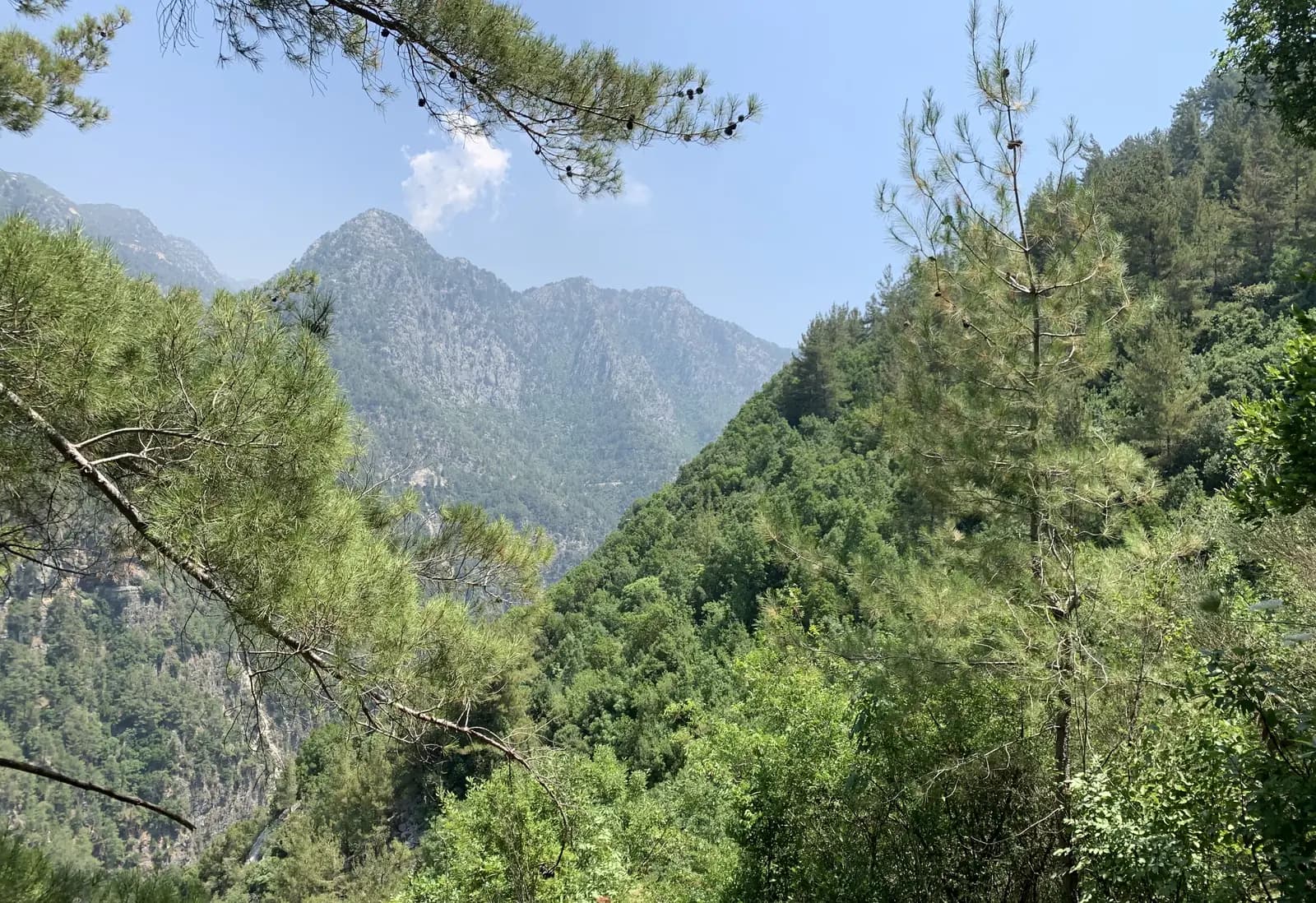
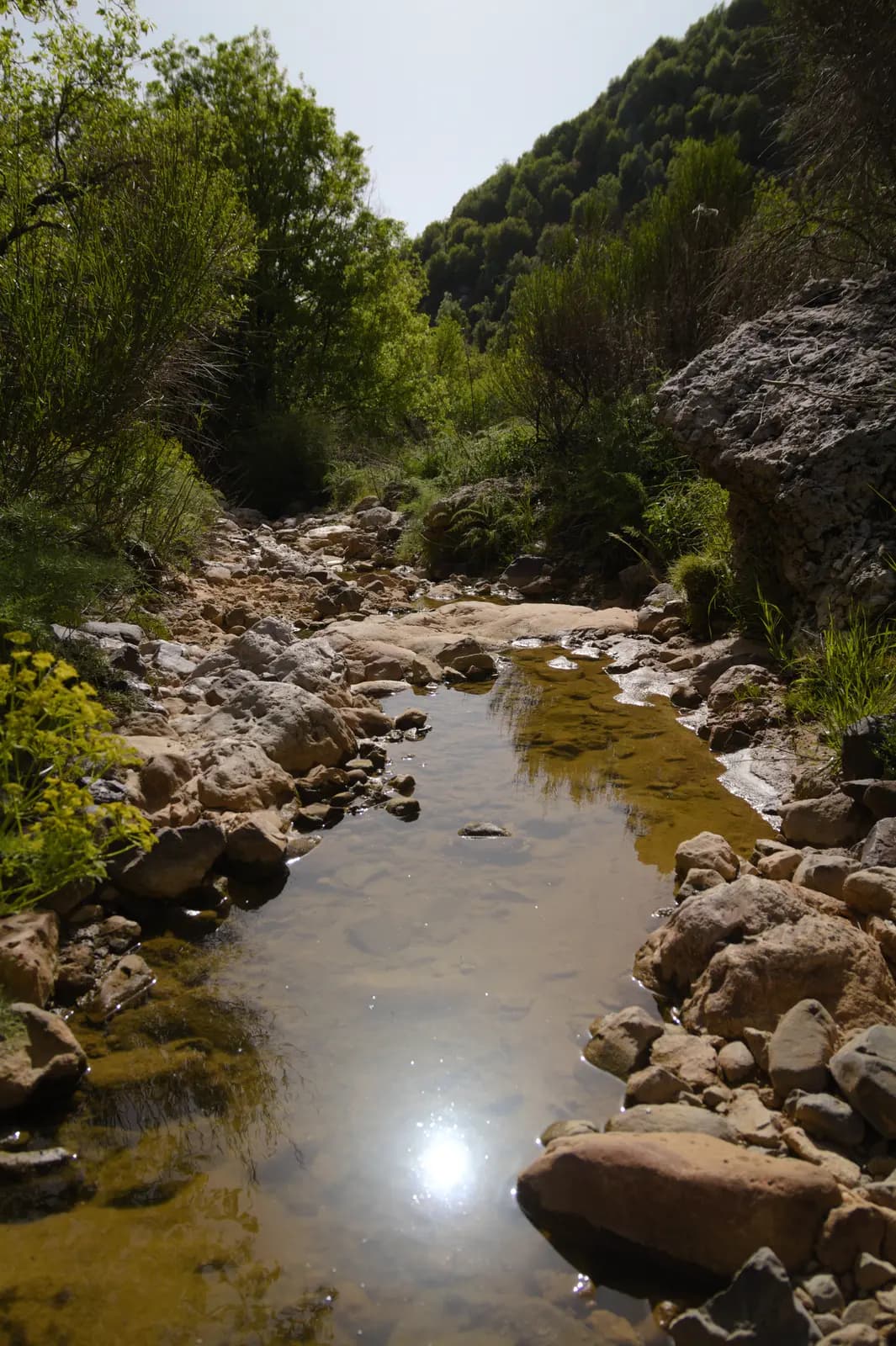
Chouwan is an area and an entrance to Jabal Moussa Biosphere Reserve. This guide focuses specifically on the Lake Trail from the Chouwan entrance to Chouwen Lake.
The lake lies beside Nahr Ibrahim in the Adonis Valley. It should not be confused with the whole reserve or every trail starting at Chouwan.
The Lake Trail
The reserve lists the Lake Trail as 1.8 kilometres each way, returning along the same path to the Chouwan entrance. Its published distance is one-way: the full outing is about 3.6 kilometres before any extra wandering.
The overall classification is moderate, with a more demanding uphill return. Budget for rest stops and the climb out rather than treating the stated one-way walking time as the whole visit. Confirm the latest route and trail status with reserve staff.
Other trails from Chouwan
The Chouwan Cultural Trail is a separate option focused on historic rural remains, a stone bridge, mills and agricultural terraces. Ask reserve staff which route suits your time and walking ability.
Some other Jabal Moussa walks use different entrances. Give your driver the Chouwan entrance for the Lake Trail and confirm the exact meeting point, rather than navigating only to the name of the biosphere reserve.
The return climb is the main planning issue
Start with enough daylight and energy for the ascent back to the entrance. Shade does not remove the effect of summer heat, and wet leaves or rock can make footing harder after rain. Wear walking shoes with grip and carry drinking water for the whole route.
Children should be comfortable with a sustained uphill walk before you choose this trail. A pushchair is unsuitable for the uneven hiking route. If anyone struggles on the descent, turn back before reaching the river rather than relying on a quick collection from the valley floor.
Swimming, photos and protecting the river
Blue-green water is not proof of safe swimming conditions. Ask reserve staff about the current rules, flow and any restrictions, and do not jump from rocks or enter fast water.
Take photographs from stable ground without stepping beyond barriers. Keep food and litter packed away, stay on the approved path and follow the reserve’s rules on fires, pets and other activities.
Use a reputable pre-booked driver or a planned hire-car route to the confirmed entrance. The final approach is different from the coastal highway journey, so allow time for slower local roads.
Agree whether the driver will wait, where to meet and how to communicate if reception is poor. A meal in Jounieh or Byblos after the walk can stay optional; do not commit to a second long attraction visit before you know how long the trail has taken.
No. It focuses on the Lake Trail from the Chouwan entrance. The wider reserve and other trails require separate planning.
Is the hike easy?
The official classification is moderate. Remember that the return climbs uphill, and heat or wet conditions can increase the effort.
Is the Lake Trail 1.8 kilometres in total?
No. The reserve lists about 1.8 kilometres each way and a return on the same trail, making roughly 3.6 kilometres overall. Leave additional time and energy for the uphill return.