
CountryLebanon
Monumental heritage in the Bekaa Valley
Baalbek
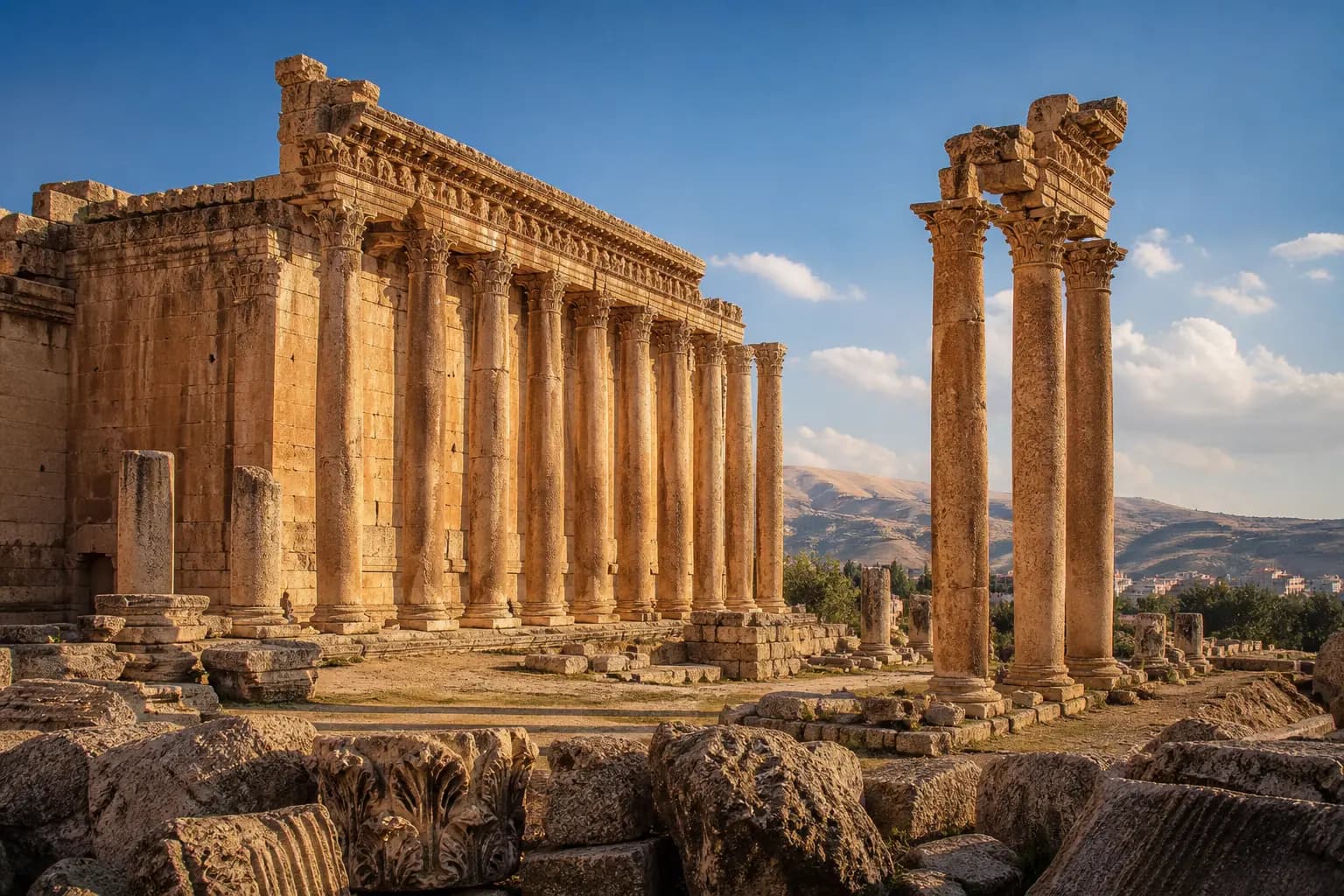
Baalbek's Roman temples are the main reason to plan time in the northern Bekaa Valley. The scale of Jupiter's columns and the detailed stonework of the Temple of Bacchus reward a focused visit; current regional travel advice and site access must determine whether the journey is appropriate.
Overview
Quick facts
RegionBekaa Valley
World HeritageUNESCO since 1984
Best forHistory and archaeology
Baalbek
What would you like to discover?
The city and its character
About Baalbek
Baalbek developed as a religious centre before the Roman period and was known as Heliopolis. The surviving sanctuary combines local religious traditions with monumental Roman architecture. Its temples make more sense as parts of a larger complex than as isolated photo stops.
The town sits in the elevated Bekaa landscape, well away from Beirut's coastal climate and traffic pattern. A temple visit is the core of a day here; longer drives, a winery stop or another archaeological site should be added only after the main journey is workable.
Allow time to understand the temple complex
For a first visit, reserve roughly two to three hours at the site as a planning estimate, with longer if you want detailed interpretation or extensive photography. Begin with the wider layout and courts, then spend time comparing Jupiter's surviving columns with the carved details around Bacchus.
A knowledgeable guide can explain which remains belong to different phases and why the sanctuary mattered. Check which areas are open before arrival: the smaller Temple of Venus is a distinct monument, and access to one part of the complex does not guarantee access to every other part.
Baalbek, Anjar and Zahle: choose the priority
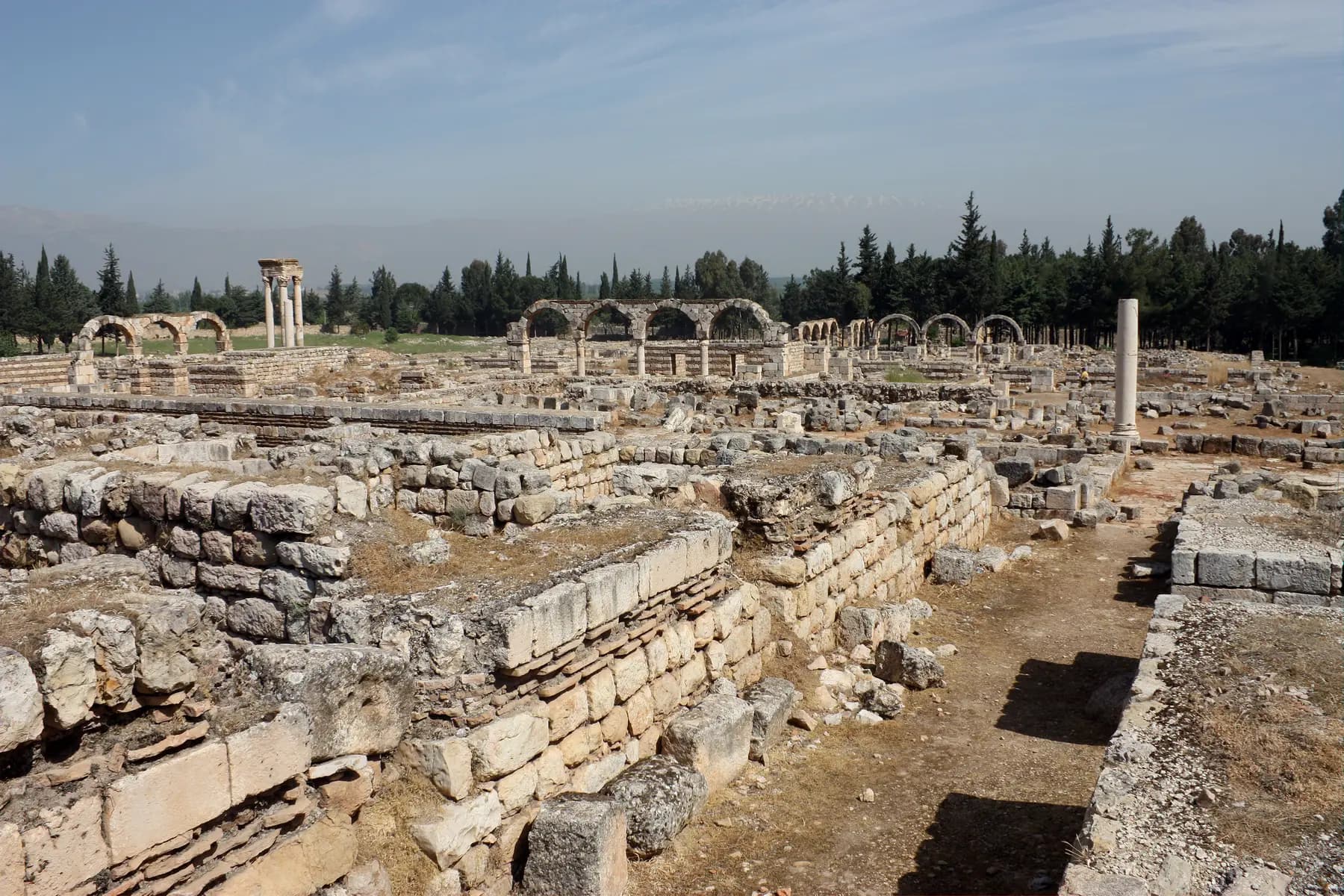
Anjar adds the remains of an Umayyad city, while Zahle and nearby winery visits provide a different view of the Bekaa. They are separate destinations within a large region. On a return trip from Beirut, combining every stop can leave too little time at Baalbek or a late drive home.
If official advice permits the trip, choose Baalbek plus at most one additional stop for a first day. A longer regional stay can reduce backtracking, but accommodation and the entire route need checking. Arrange a non-drinking driver for any wine tasting.
Weather, uneven ground and travelling with children
The site is open and exposed, with stone steps and uneven surfaces. Wear shoes with grip, carry water and sun protection, and bring an extra layer outside the hottest part of the year. Conditions in the elevated valley can differ substantially from the coast.
For children, make the visit about a few visible details: the scale of columns, carved doorways and the shape of the courts. Build in rest breaks and keep children off fragile masonry. Ask the site directly about step-free access before travelling if stairs or rough ground would be a barrier.
Find the right area
Areas to know
Temple complex
The archaeological area containing the temples associated with Jupiter, Bacchus and Venus.
Best for: archaeology and architectureWhat to experience
Attractions
Baalbek Temples
The main archaeological visit, combining the sanctuary’s courts with monumental columns and richly carved temple buildings. Allow a substantial part of the day for the site itself.
Read the Baalbek Temples guideColumns of the Temple of Jupiter
The surviving columns and the terrace below them convey the scale of the sanctuary. Look at them as part of the wider site layout rather than only from one viewpoint.
Temple of Bacchus
Look for the richly carved monumental doorway and surrounding stonework. This is a place to slow down after taking in the larger scale of the complex.
Anjar
A planned Umayyad city elsewhere in the Bekaa Valley that adds a contrasting historical period to a regional itinerary.
Read the Anjar guide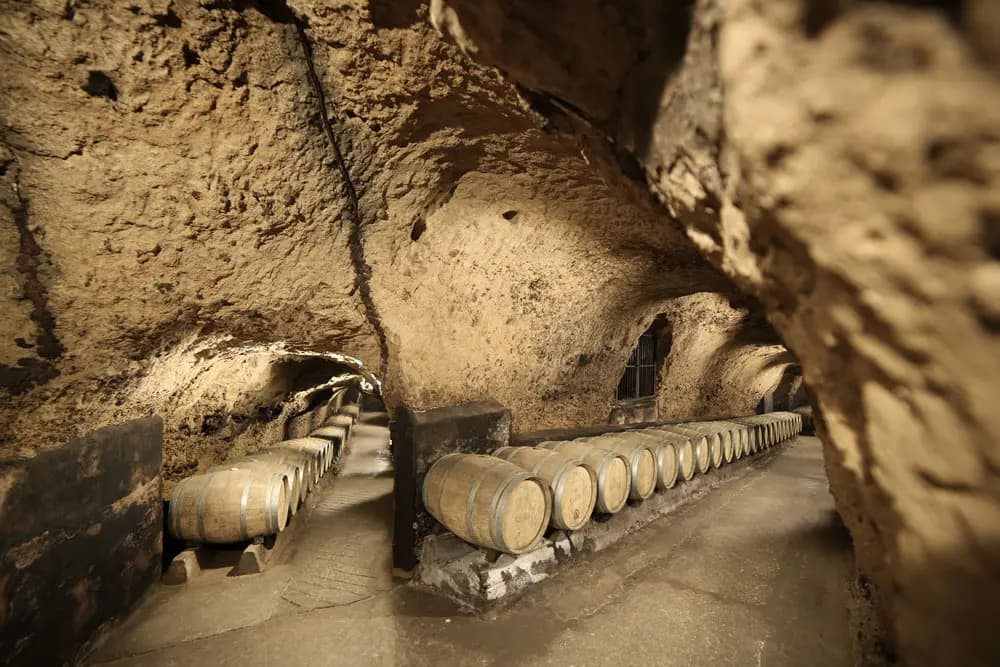
Chateau Ksara
A historic winery near Zahle with stone-vaulted underground cellars; confirm tours and arrange a non-drinking driver if tasting.
Read the Chateau Ksara guideFlavours
Food & restaurants
Allow a meal break in town rather than assuming food will be available throughout the archaeological visit. Bakeries and Lebanese dishes provide simpler options than adding a long restaurant detour. Ask locally what is open and confirm arrangements if your driver is waiting or you are continuing towards another Bekaa stop.
Practical information
Getting around
From Beirut, the journey crosses the mountains into the Bekaa and continues through the valley. Arrange a recognised operator with an experienced driver, and check the current official advice for the full route as well as Baalbek. A confirmed booking is not a substitute for those checks.
Agree whether the quoted trip includes waiting at the temples, any additional stops and the return journey. Avoid a fixed airport connection after this excursion. Winter weather, traffic, road closures and local conditions can all affect the plan.
Read the full transport guideWhere to stay
Where should you stay?
Baalbek city
Only book after checking current regional advice and local conditions. Confirm the exact location, meals, power supply, heating and transport.
- Best for
- a focused archaeological visit
- Strengths
- less travel between accommodation and the temples
Zahle and the central Bekaa
Zahle is a separate base, not walking distance from Baalbek. Compare the extra road journeys and check the full route before choosing it.
- Best for
- a broader itinerary when conditions permit
- Strengths
- access towards central Bekaa stops
Before your trip
Good to know
Official travel advice
Read the current government advice and regional map before booking. Check the entire route as well as the destination, and review advice again before departure.
Foreign, Commonwealth & Development Office ↗Confirm site access
Check directly with official heritage or site contacts close to the proposed visit. Published heritage information establishes significance, not today’s opening hours or available areas.
Avoid an overloaded day
Give the temple complex priority. Baalbek, Anjar, a winery and long drives can exceed a comfortable sightseeing day even when map distances look manageable.
Read more about Avoid an overloaded dayPhotography
Follow official advice and photograph only where permitted at tourist sites. Do not photograph checkpoints, military installations or security personnel; ask before including people.
Booking flexibility
Choose transport and accommodation with clear cancellation terms. Changes to regional advice or road conditions may require postponing the entire excursion.
Read more about Booking flexibilityKeep exploring
More destinations you may like
Beirut
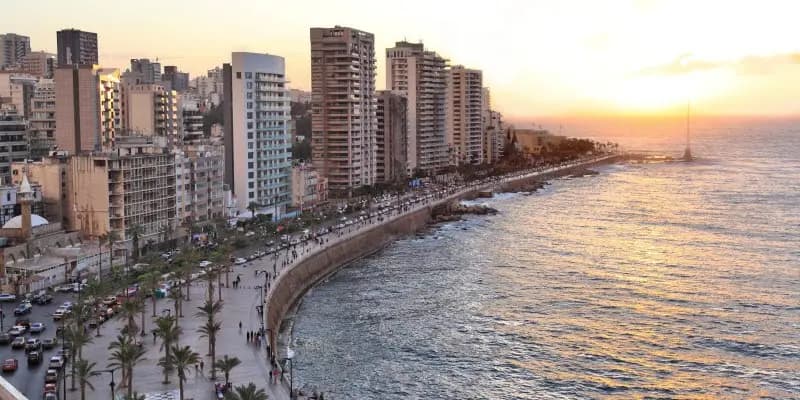
A Mediterranean capital of museums, waterfront walks, restaurants and neighbourhoods with distinct personalities.
Read the Beirut guide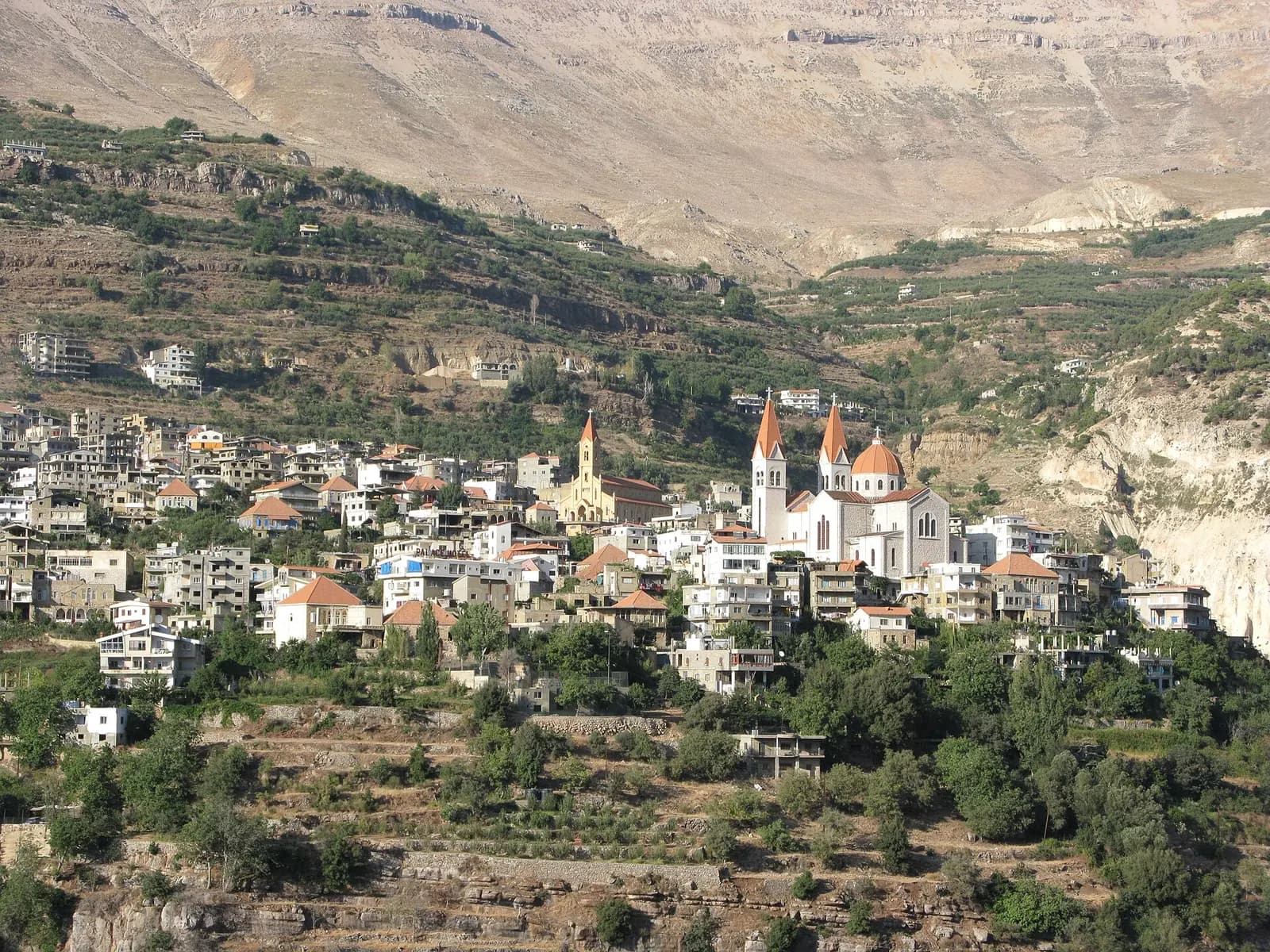
Bsharri and the Cedars
A mountain base for Qadisha Valley, Cedars of God and some of Lebanon's most dramatic scenery.
Read the Bsharri and the Cedars guideFrequently asked questions about Baalbek
How long should I spend at Baalbek?
As a planning estimate, allow two to three hours for the main archaeological site and longer for an in-depth guided visit. The road journey and meal stops are additional, so a visit from Beirut needs a full day.
What is the difference between Baalbek and Anjar?
Baalbek is known for its monumental Roman sanctuary. Anjar preserves the layout and buildings of an Umayyad city. They cover different historical periods and are separate stops in the Bekaa Valley.
Can I visit Baalbek as a day trip from Beirut?
It can form a full-day road excursion when current official advice, route conditions and site access permit. Arrange a reputable driver and keep the schedule flexible; do not pair it with a tightly timed flight.
Is Baalbek suitable for visitors with reduced mobility?
The site includes uneven ground, steps and exposed areas. Contact the site directly to establish which route and assistance are currently available; do not assume every monument has step-free access.
Where can I check opening hours and travel advice?
Use official heritage or site contacts for current opening and access, and your government’s Lebanon travel advice for the regional situation. Both need checking; an open monument does not establish that travel to it is advisable.