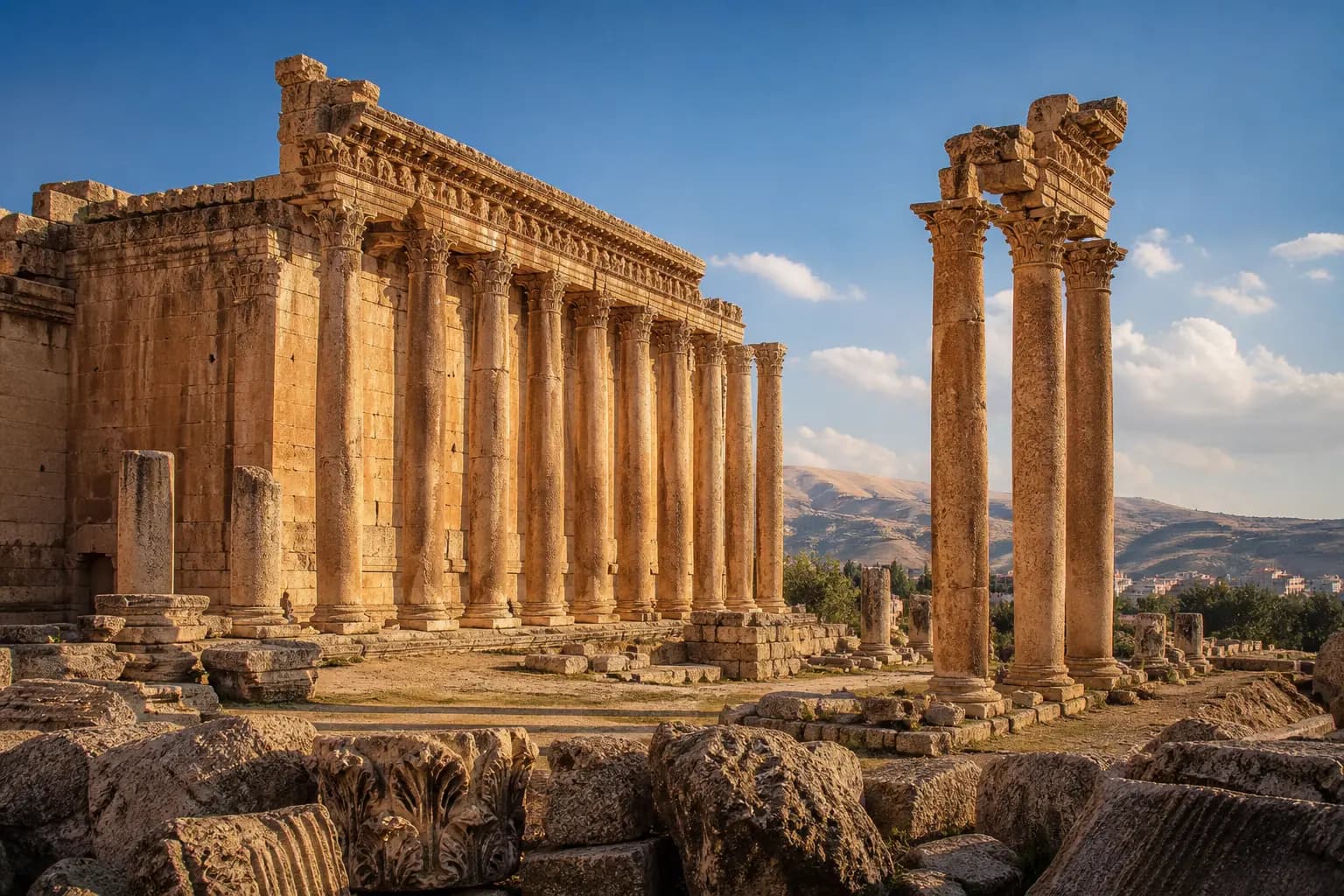
One of the Roman world's most monumental sanctuary complexes, dominated by the temples of Jupiter and Bacchus.
Archaeology and history
Quick facts
Area
Baalbek, Bekaa Valley
Historic setting
Roman Heliopolis
Status
UNESCO World Heritage
From Heliopolis to World Heritage
During Roman rule, Baalbek, then known as Heliopolis, developed into a vast sanctuary complex. Construction over several periods created monumental Roman architecture on a site with a much longer history.
UNESCO recognises Baalbek as one of the most important sanctuary complexes of the Roman world.
Jupiter, Bacchus and Venus
The surviving columns of the Temple of Jupiter show the scale of the complex. The Temple of Bacchus is exceptionally well preserved and richly decorated, while the Temple of Venus has a distinctive rounded plan.
The great stone blocks
The sanctuary’s massive stonework is part of its impact: look at the foundations as well as the columns and carved doorways. Blocks at the nearby quarry are a separate stop, not a reason to shorten time in the temple complex.
A site guide can help distinguish building phases and explain which structures are Roman and which reflect later uses. Confirm the meeting point, language and scope of a guided visit before arrival.
How to approach the temple complex
Begin with an overview of the sanctuary’s layout, then leave time to look closely at the architectural detail around Bacchus. The immense scale is easier to appreciate when you compare gateways, courtyards and surviving columns rather than photographing each as an isolated monument.
Follow the route authorised on the day. Conservation work may alter access to individual structures, and a named temple in a guide is not a promise that every part can be entered.
Expect rough stone surfaces, steps and considerable open space with limited shade. Wear shoes with grip and carry water, a hat and sun protection; ruins that look close together may involve more walking than expected.
For children, a shorter visit centred on the largest columns and one temple may be more successful than trying to inspect every ruin. Do not climb on masonry. Ask about the actual entrance-to-site route if using a wheelchair or pushchair.
Plan the journey before adding another stop
Check current official travel advice for Baalbek and the roads you would use before arranging a leisure visit. Where travel is appropriate, the temple complex should be the main event of the day.
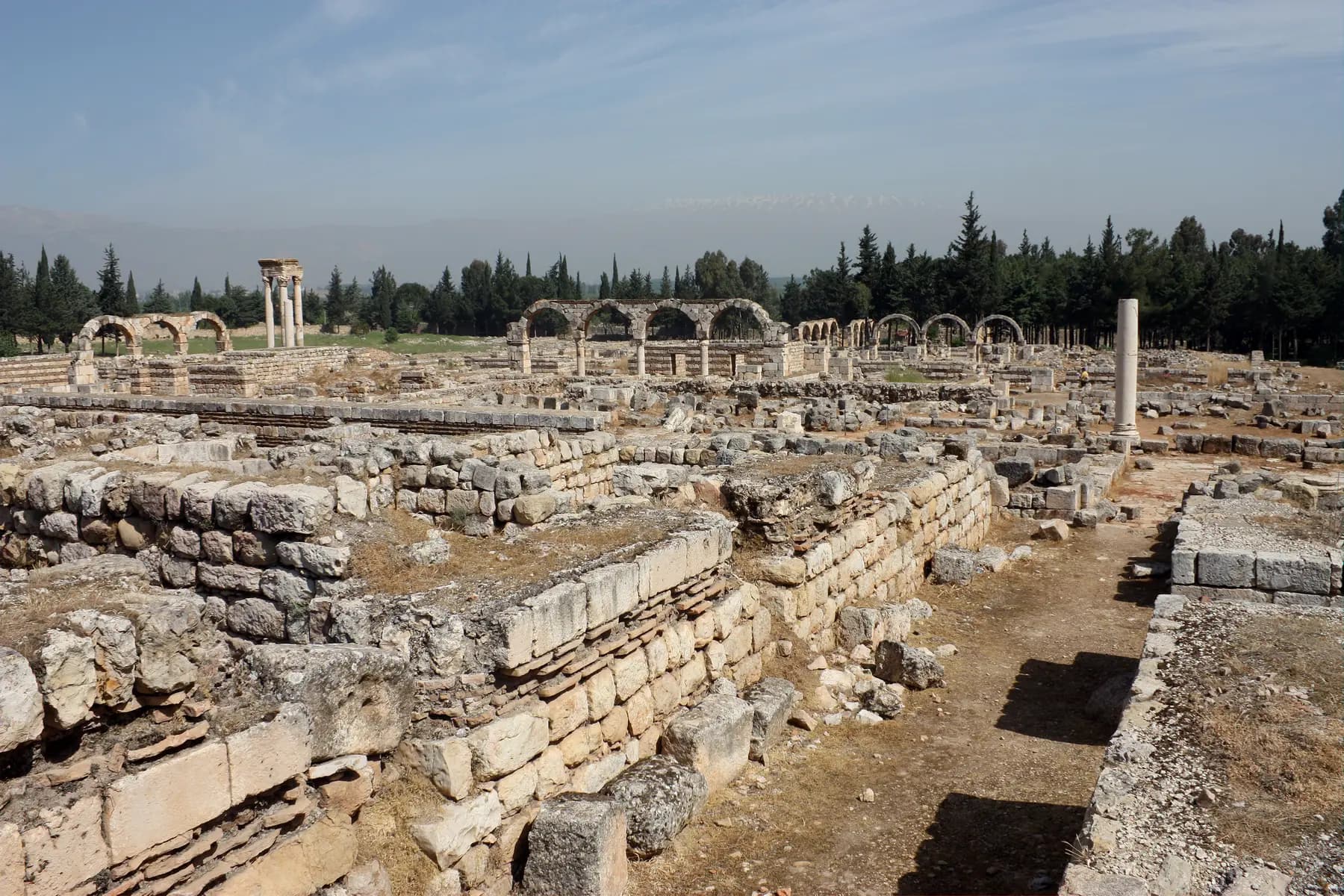
Anjar represents another historical period but requires additional road travel. A winery appointment, both archaeological sites and a return to Beirut create a tightly packed day; choose the stops that match your interests and the available daylight.